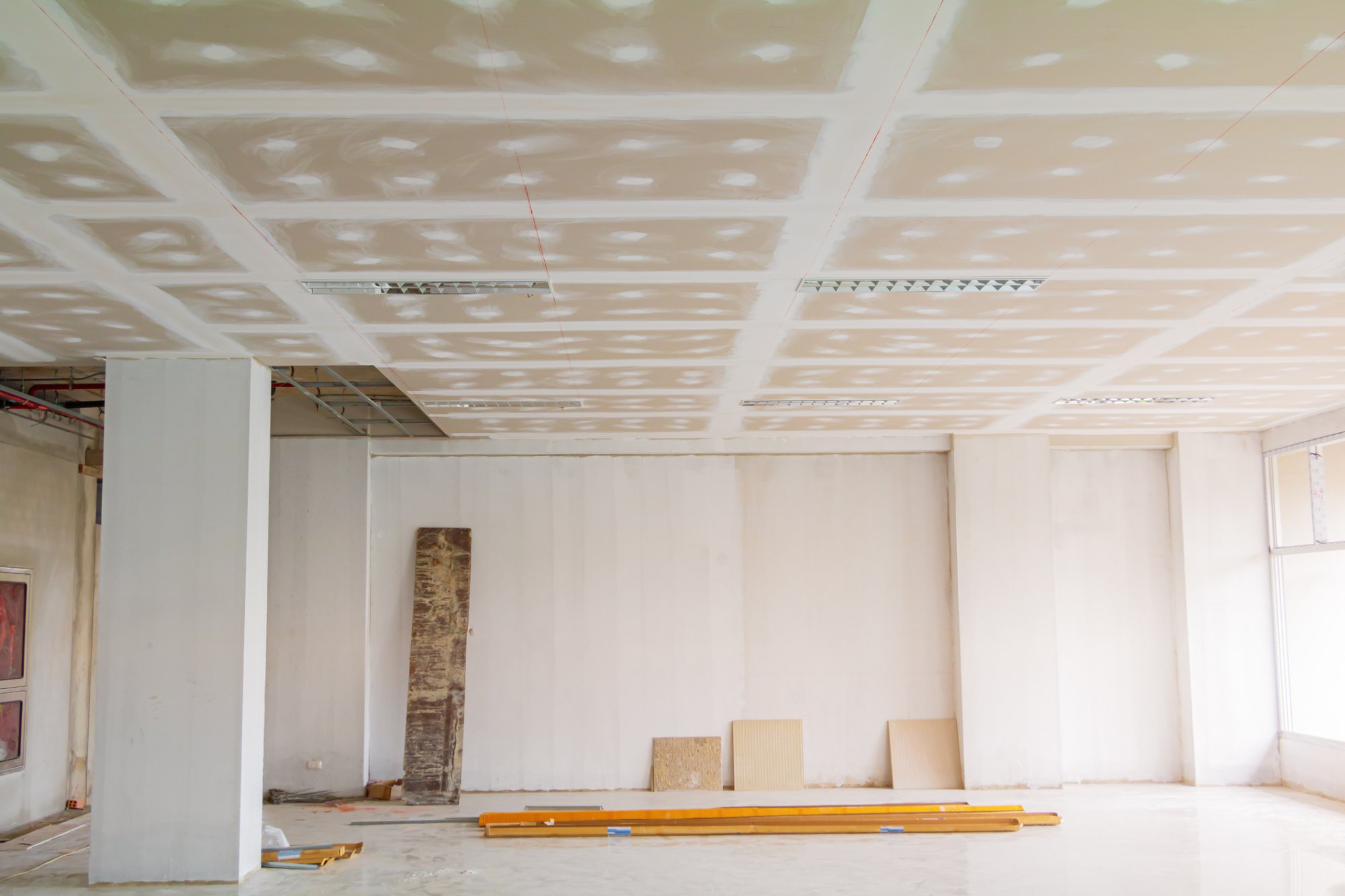
Commercial drywall quality is visible every day - in the shadows across a wall under side light, in the flatness of a Level 5 finish under a coat of paint, in the tight corner at a 90-degree outside angle. Forthright delivers commercial drywall work that holds up under scrutiny.
We handle the full scope - board, tape, and finish - for commercial new construction, tenant fit-out, and renovation projects. We work to the finish level specified, coordinate with painting and flooring trades on schedule, and leave the job clean.
Commercial Drywall Services
Board & Tape
Hang, tape, and mud for commercial interiors - single-layer and multi-layer assemblies, fire-rated wall and ceiling assemblies per UL listing requirements, type X and type C board where specified.
Level 4 Finish
Standard commercial finish - appropriate for flat paint, light textures, and most commercial paint applications. All joints, fasteners, and beads are coated with three separate coats of compound and sanded to a flat, consistent surface.
Level 5 Finish
Premium finish with a skim coat of joint compound applied over the entire surface - eliminates all surface texture and produces a uniform plane. Required for gloss and semi-gloss paints, side-lit environments, and high-end commercial interiors. This is the finish level where the quality of the drywall sub becomes visible.
Fire-Rated Assemblies
UL-listed fire-rated wall and ceiling assemblies - 1-hour, 2-hour, and 3-hour ratings. We work from the UL assembly numbers specified in the drawings and coordinate inspection requirements with the GC and AHJ.
Tenant Fit-Out
Commercial tenant fit-out packages - office, retail, medical, hospitality. We coordinate with framing, MEP rough-in, and finish trades to keep the schedule moving. No patch-and-repair work.
Ceiling Systems
Drywall ceilings, soffits, and bulkheads. Coffered and curved ceiling elements. Grid and tile work is outside our scope - we focus on drywall ceiling assemblies.
Finish Levels - What They Mean and When They Matter
The Gypsum Association's finish level standards (Level 0 through Level 5) define the degree of surface preparation required before paint. Most GCs spec Level 4 as the commercial standard. Level 5 - a full skim coat - is required for gloss paint finishes and any environment where side lighting will reveal surface imperfections. Lobbies, boardrooms, high-end retail, and hospitality interiors typically warrant Level 5.
We discuss finish level with the GC at scope review and confirm it in writing before we start. Delivering Level 4 when the spec called for Level 5 - or the reverse - is the kind of miscommunication that creates expensive callbacks. We'd rather have that conversation up front.
Frequently Asked Questions
Level 4 is the standard commercial finish - all joints, fasteners, and corner beads are coated with three coats of compound, sanded smooth, and ready for flat or eggshell paint. Level 5 adds a full skim coat of joint compound over the entire wall surface, creating a perfectly uniform plane. Level 5 is required when gloss or semi-gloss paint is specified, under side lighting conditions where surface imperfections are visible, and in high-end commercial interiors. It costs more - the skim coat step is labor-intensive - but it's the right answer for the right environments.
No - our commercial drywall scope is new work on new or substantially renovated commercial spaces: board, tape, and finish for full rooms or buildings. We don't take patch-and-repair calls. For commercial clients who need ongoing maintenance drywall work, we'd suggest a general handyman or small residential drywall company.
Fire-rated drywall assemblies are tested and listed by UL (Underwriters Laboratories) - the listing specifies the exact stud gauge and spacing, board type and thickness, fastener type and pattern, and any additional components like resilient channels or cavity insulation. The result is a rating in hours - a 2-hour assembly is tested to contain fire on one side for 2 hours. We build to the UL assembly number specified in the architectural drawings and coordinate inspection requirements with the GC. The fire marshal or AHJ typically inspects before boarding is completed so the assembly can be verified.
Yes - tenant fit-out work in occupied buildings is a common part of our commercial scope. We coordinate access, dust containment, and work hours with the GC and property manager. Drywall is dusty by nature; we seal off work areas with temporary barriers and schedule heavy sanding outside of occupant hours where required.